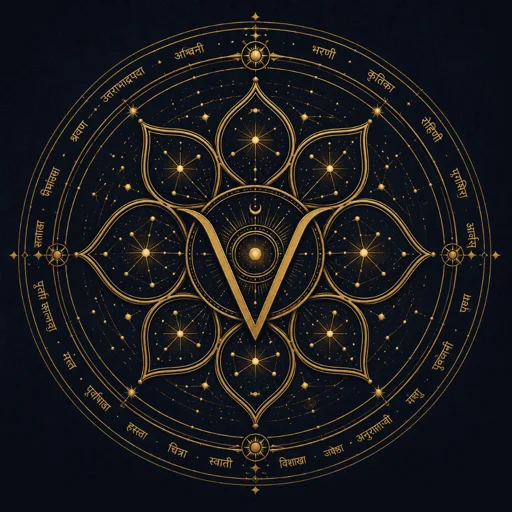

Your sky,at oneexact moment.
Birth star · Nakshatra
Your birth star is the nakshatra the Moon held when you were born.
New to Vedic astrology?
How it differs from the horoscope in your phone.
1 of 3
Your birth star is about the Moon
Not your Sun sign: the slice of sky the Moon was in, one of 27 .
2 of 3
Your sign may move back one
Signs are measured against the stars, not the seasons, so a Western Leo is often a Cancer.
3 of 3
Meaning first, sources after
A plain-English reading of your star, with the books behind each fact underneath.

From birth to chart
An example moment, not your chart. Example: Ujjain, 1 January 2000, 12:00 IST (Indian Standard Time).
A place on Earth.
23.1765° N · 75.7885° E
23.1765° N · 75.7885° E One exact moment.
2000-01-01 · 12:00 · UTC+05:30
2000-01-01 · 12:00 · UTC+05:30 The Moon moves fast.
≈13° a day / 184°34′ → 196°43′
≈13° a day / 184°34′ → 196°43′ Twenty-seven equal parts.
27 × 13°20′ = 360°
Surya Siddhanta ch. 2 v. 64 (E. Burgess, 1860)
Ayanamsa 23°51′
27 × 13°20′ = 360° The Moon's star.
Moon 196°43′ → Swati (15), pada 4
Moon 196°43′ → Swati (15), pada 4 Your star, with sources.
Swati / classical Vedic astrology
Swati
स्वाति
A slice of sky from 186°40′–200°00′ along the Moon's path, measured in the zodiac.
- Real stars you can see
- Arcturus (α Boötis)
- Vayu
- Buffalo
- Deva
Where these facts come from
- Surya Siddhanta ch. 8 (E. Burgess, 1860)
- Muhurta Chintamani 6.25-30 (Khemraj, 1879)
Find the Moon’s place at your birth.

27 × 13°20′
One circle, twenty-seven parts.
Surya Siddhanta ch. 2 v. 64 (E. Burgess, 1860)
Photograph made for Vediq
Your Sun may have shifted.
Western signs follow the seasons. Sidereal signs follow the stars, so your Sun sign may differ.
Western astrology uses the , tied to the seasons. Vedic astrology uses the , tied to the stars. Earth's slow wobble has pulled them about 24° apart (the ), so your Vedic Sun sign is often the one before your Western sign. Your birth star follows the Moon, not the Sun.
Read the sky and text sources| Reference | Tropical | Sidereal |
|---|---|---|
| Measured from | Seasons / equinox | Fixed stars |
| Used by | Western astrology | Vedic astrology |
| Gap between them () | 23°51′ | |
The 27 stars.
The Moon crosses one of these slices of sky about every day. Each has its own character in the tradition. Tap one to read it.
- Ruled by KetuAshwiniअश्विनीThe quick starter: swift, helpful, always ready for what is new.Animal: Horse
- Ruled by VenusBharaniभरणीThe strong carrier: intense, creative, able to see things through.Animal: Elephant
- Ruled by SunKrittikaकृत्तिकाThe sharp cutter: honest, driven, burns away what is false.Animal: Sheep
- Ruled by MoonRohiniरोहिणीThe magnet: sensual, creative, makes things grow and flourish.Animal: Serpent
- Ruled by MarsMrigashiraमृगशिराThe gentle seeker: curious, restless, always chasing the next scent.Animal: Serpent
- Ruled by RahuArdraआर्द्राThe storm: strong feeling that clears the air and starts fresh.Animal: Dog
- Ruled by JupiterPunarvasuपुनर्वसुThe returner: hopeful, nurturing, always gets a second chance.Animal: Cat
- Ruled by SaturnPushyaपुष्यThe nourisher: steady, protective, a giver of care and guidance.Animal: Sheep
- Ruled by MercuryAshleshaआश्लेषाThe deep reader: shrewd, magnetic, sees what lies beneath.Animal: Cat
- Ruled by KetuMaghaमघाThe royal heir: proud, loyal to its roots, wants to lead.Animal: Rat
- Ruled by VenusPurva Phalguniपूर्वफाल्गुनीThe pleasure-lover: playful, romantic, values rest and art.Animal: Rat
- Ruled by SunUttara Phalguniउत्तरफाल्गुनीThe reliable partner: generous, helpful, strongest in committed bonds.Animal: Cow
- Ruled by MoonHastaहस्तThe skilled hand: clever, dexterous, a maker and fixer.Animal: Buffalo
- Ruled by MarsChitraचित्राThe designer: brilliant, charismatic, builds things that shine.Animal: Tiger
- Ruled by RahuSwatiस्वातिThe independent wind: free, adaptable, hard to pin down.Animal: Buffalo
- Ruled by JupiterVishakhaविशाखाThe determined climber: focused on a goal and hungry to arrive.Animal: Tiger
- Ruled by SaturnAnuradhaअनुराधाThe loyal friend: devoted, cooperative, succeeds through others.Animal: Deer
- Ruled by MercuryJyeshthaज्येष्ठाThe elder: protective, capable, carries responsibility early.Animal: Deer
- Ruled by KetuMulaमूलThe root-digger: investigates to the source, rebuilds from scratch.Animal: Dog
- Ruled by VenusPurva Ashadhaपूर्वाषाढाThe persuader: confident, uplifting, hard to defeat once convinced.Animal: Monkey
- Ruled by SunUttara Ashadhaउत्तराषाढाThe steady leader: principled, wins lasting results through integrity.Animal: Mongoose
- Ruled by MoonShravanaश्रवणThe listener: learns by hearing, connects people and ideas.Animal: Monkey
- Ruled by MarsDhanishtaधनिष्ठाThe drummer: rhythmic, ambitious, sets the beat for others.Animal: Lion
- Ruled by RahuShatabhishaशतभिषाThe private healer: solitary, mystical, drawn to hidden things.Animal: Horse
- Ruled by JupiterPurva Bhadrapadaपूर्वभाद्रपदाThe fiery idealist: intense, visionary, sees beyond the ordinary.Animal: Lion
- Ruled by SaturnUttara Bhadrapadaउत्तरभाद्रपदाThe calm deep: patient, compassionate, a steadying presence.Animal: Cow
- Ruled by MercuryRevatiरेवतीThe gentle guide: kind, creative, sees others safely through.Animal: Elephant
Sky. Text. Test.
We name the text behind each fact. We don’t promise accuracy about you.
Sky
The Moon’s measured place in the sidereal zodiac.
Text
Vedic and classical sources, named separately.
Test
Read the citation beside each fact.

A few things to know.
